A crash scrambles your thinking. This is a short list to follow while your adrenaline is high. Read it once now, and you’ll remember more of it when it counts.
This is general safety information, not legal or medical advice. If anyone is hurt, call 911 before you do anything else.
The 10 minutes at a glance
- 0 to 1 minCheck for injuries
- 1 to 3 minGet safe
- 3 to 5 minCall for help
- 5 to 8 minExchange information
- 8 to 10 minTake photos
Minute 0 to 1: Stop and check for injuries
- Stop. Put the car in park and turn off the engine.
- Turn on your hazard lights.
- Check yourself, then everyone in your car.
- If anyone is hurt, or you see smoke or smell fuel, call 911 now.
Don’t move someone with neck or back pain unless they’re in immediate danger, like a fire.
Minute 1 to 3: Get safe
If nobody is hurt and the car can still be driven, move it out of the travel lanes to the shoulder or a nearby lot. About half of states have “Move It” or “Steer It, Clear It” laws that require this after a minor, injury-free crash.
If the car can’t be moved, decide whether it’s safer to stay buckled in with your hazards on or to get well away from traffic. On a busy highway, standing between cars is the most dangerous place to be. Set out flares or triangles if you have them.
Minute 3 to 5: Call for help
Call 911 if anyone is hurt, the road is blocked, a driver seems impaired, or the other driver leaves. Otherwise, call the local police non-emergency line. Many states require you to report a crash that causes an injury or damage over a set amount.
Ask the officer how to get a copy of the crash report, and write down the report number.
Minute 5 to 8: Exchange information
Keep the conversation to facts and information. Be polite, and don’t argue about what happened at the scene.
Minute 8 to 10: Photograph everything
Photos taken in the first few minutes capture details that are gone once the cars are towed.
After the first 10 minutes
- Get checked by a doctor, even if you feel fine. Some injuries take hours or days to show up.
- Tell your insurance company about the crash.
- Keep one folder for everything: photos, the report number, receipts and notes.
- Write down what happened while it’s fresh: the time, the direction each car was going, and what you saw.
Keep this list on your phone
AngelDrive is a free family safety app for iPhone and Android. If it notices signs of a possible crash, it asks first: “We felt that. Are you okay?” You can say you’re safe, call 911, or tell it there was no crash. Then a step-by-step crash guide opens on your phone, if you need it.
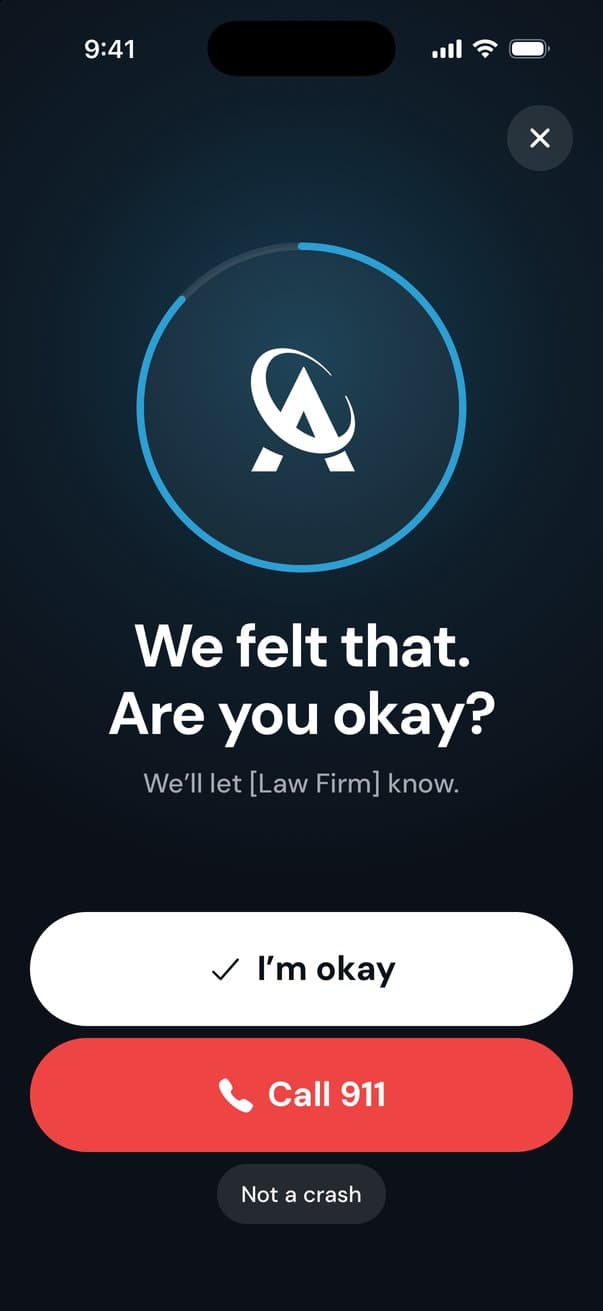
AngelDrive can miss a crash and does not contact emergency services for you. In an emergency, call 911.
Sources
More guides
Teen drivers
The new teen driver checklist
A parent’s checklist for a newly licensed teen: what to do before the first solo drive, the rules for the first six months, and habits for every drive.
Teen drivers
Teen driver apps for parents: what to look for
What a good teen driver app does, the questions to ask before you install one, and how to set it up with your teen so it helps instead of hovers.
Family safety
Free family locator apps: what free should include
Plenty of family locator apps are free to download. Here is what free should include, how free apps pay for themselves, and the privacy questions to ask.